


Cognitive Biases

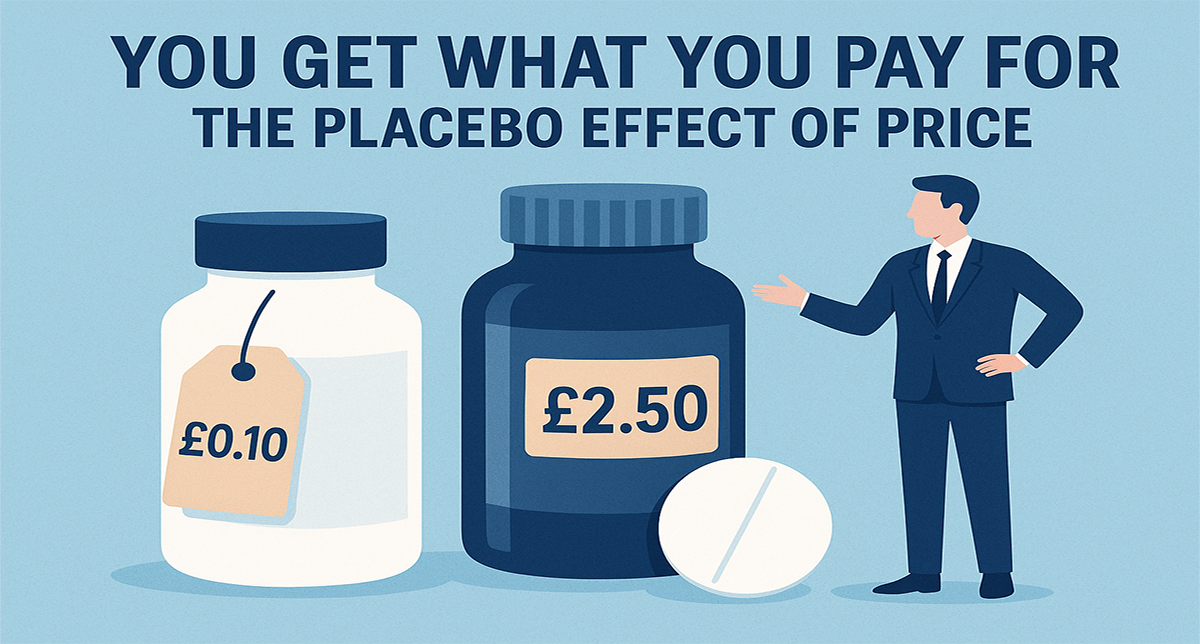
You Get What You Pay For: The Placebo Effect of Price
The “you get what you pay for” placebo effect isn’t just a quirky psychology experiment, it’s a robust insight into how expectations shape reality.
Read Story
Unleash Neurotransmitters for Optimal Brand performance
Elevate the Shopping Experience: Are you ready to discover the key to unlocking brand performance in-store? Add a D.O.S.E of neuroscience...
Read Story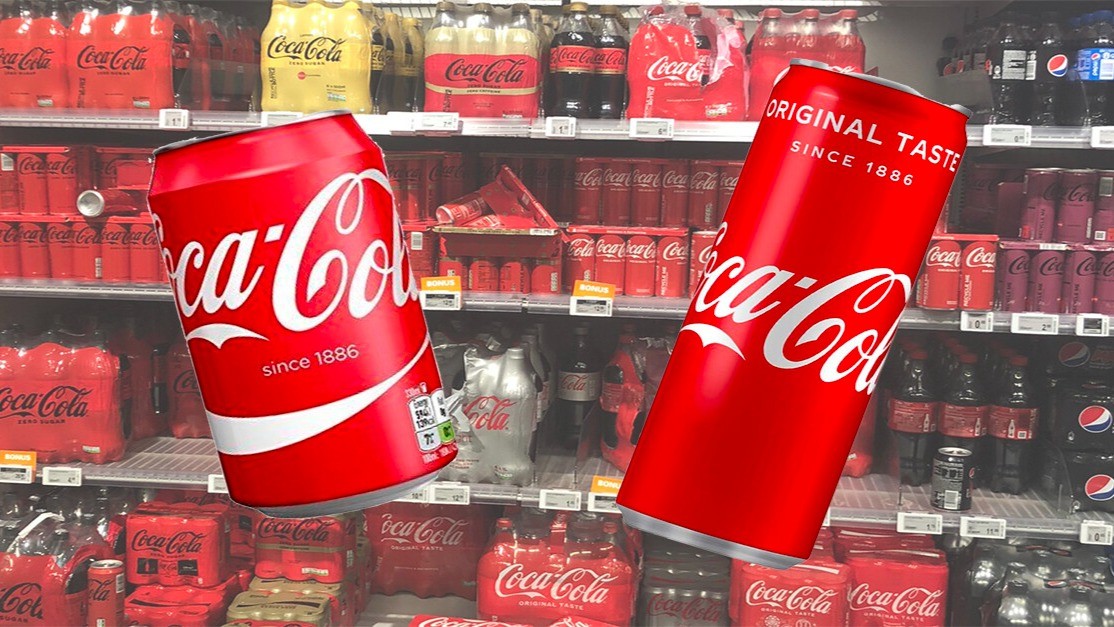
Can the Shape of a Glass, Bottle or Can Influence How Much You Drink
Have you ever wondered why you might finish a tall glass of cola more quickly than a short, round one?
Read Story
No.36 Zero Risk Bias & Shopping Sustainably
Using zero-risk bias can work in en employer's favour when it comes to sustainable shopping.
Read Story.png)
No.35 Third Person Effect & Shopping Sustainably
Understanding the impact of advertising and media messaging can impact our purchasing habits.
Read Story
No.34 Salience Bias & Shopping Sustainably
Making your product stand out against the crowd will make shoppers more likely to choose it.
Read Story
No.33 Restraint Bias & Shopping Sustainably
Using emotional temptation can persuade shoppers to opt for the sustainable option.
Read Story
No.32 Pseudocertainty & Shopping Sustainably
How can employers guide shoppers towards the more sustainable option?
Read Story
No.31 Present Bias & Shopping Sustainably
Shopping more sustainably is more about long-term consequences, but how can we convince shoppers that this is the best option to choose?
Read Story
No.30 Post Purchase Rationalisation & Shopping Sustainably
Making sure customers are aware that the sustainable choice is the best one can work in your favour.
Read Story
No.29 Negativity Bias & Shopping Sustainably
The impact of the negativity bias on sustainable shopping habits.
Read Story.png)
No.28 Mere Exposure Effect & Shopping Sustainably
The importance of understanding this cognitive bias cannot be underestimated.
Read Story
No.27 Loss Aversion & Shopping Sustainably
How to make sure loss aversion doesn't negatively affect your business.
Read Story.png)
No.26 Less is Better Effect & Shopping Sustainably
Making sure your customers are not overwhelmed with choice can work in your, and the planet's favour.
Read Story
No.25 Sunk Cost Fallacy & Shopping Sustainably
How the sunk-cost fallacy is incorporated into sustainable shopping.
Read Story
No.24 Illusory Truth Effect & Shopping Sustainably
The ways you can use the illusory effect in your own sustainability initiatives.
Read Story
No.23 The IKEA Effect on Shopping Sustainably
How can employers use the IKEA effect to encourage sustainability?
Read Story
No.22 Hyperbolic Discounting & Shopping Sustainably
Understanding and recognising hyperbolic discounting can help encourage consumers to opt for a more sustainable choice.
Read Story
No.21 Groupthink & Shopping Sustainably
Groupthink can have a significant impact on the way consumers make sustainable decisions.
Read Story.jpg)
No.20 The Framing Effect & Shopping Sustainably
Ways that companies can utilise the framing effect when trying to switch consumers' perspectives on their products.
Read Story.jpg)
No.19 Focussing Effect & Shopping Sustainably
When we tend to fixate on the first piece of information we receive, this can impact our purchasing habits.
Read Story%20(1).jpg)
No.18 Endowment Effect on Shopping Sustainably
Our tendency to place a higher value on products that we already own can effect the retail space.
Read Story%20(1).jpg)
No.17 Distinction Bias & Shopping Sustainably
When we are choosing between two products simultaneously, our views are different.
Read Story.jpg)
No.16 Denomination effect & Shopping Sustainably
We are typically more likely to spend money when it is in smaller denominations. This can be used to encourage sustainable choices.
Read Story.jpg)
No.15 The Default Effect & Shopping Sustainably
Using the default effect correctly can ensure customers opt for the most sustainable option when presented with a range of choices.
Read Story.jpg)
No.14 The Decoy Effect and Shopping Sustainably
Ensuring that your product stands out against other options so that shoppers choose the most sustainable option is possible when employing the Decoy Effect.
Read Story.jpg)
No.12 Congruence Bias & Shopping Sustainably
How congruence bias provides opportunities in sustainable shopping.
Read Story.jpg)
No.11 Confirmation Bias & Shopping Sustainably
Ways you can use confirmation bias to encourage sustainable shopping practices.
Read Story.jpg)
No.10 Choice-Supportive Bias & Shopping Sustainably
The ways to utilise choice-supportive bias to encourage customers to implement sustainable choice into their purchasing decisions.
Read Story.jpg)
No.9 Ben Franklin Effect on Shopping Sustainably
How we can use the Ben Franklin effect when encouraging shoppers to carry out sustainable actions.
Read Story.jpg)
No.8 Base Rate Fallacy & Shopping Sustainably
When we mistakenly judge a situation and fail to take into account all surrounding relevant information, we are using the base rate fallacy.
Read Story.jpg)
No.7 The Bandwagon Effect & Shopping Sustainably
Our tendency to follow the crowd has an impact on our sustainable shopping experience.
Read Story.jpg)
No.6 Availability Heuristic & Shopping Sustainably
Specific criteria that we remember can affect our decision-making when shopping sustainably.
Read Story.jpg)
No.5 Automation Bias & Shopping Sustainably
Automatically assuming that details are correct when shopping affects our ability to shop sustainably.
Read Story%20(1).jpg)
No.4 Attribute Substitution & Shopping Sustainably
When we don't consider the wider picture while we make a purchase we are implementing attribute substitution.
Read Story.jpg)
No.3 Attentional Bias & Shopping Sustainably
When we don't try to see all sides of a story we are displaying attentional bias and this comes into play when we are shopping sustainably.
Read Story.jpg)
No.2 The Anchoring Effect on Shopping Sustainably
Our tendency to rely on the first piece of information that is fed to us can impact how we shop sustainably.
Read Story
No.1 The Ambiguity Effect on Shopping Sustainably
When applying cognitive biases to promote sustainable shopping we can see the impact of the ambiguity effect on our sustainable shopping practices.
Read Story
No.36 What is Zero Risk Bias?
Zero-risk Bias is a tendency to prefer the complete elimination of a risk even when alternative options produce a greater reduction in risk overall.
Read Story
No.34 What is Salience Bias?
Salience Bias is the cognitive bias that predisposes shoppers to focus on items that are more prominent or emotionally striking.
Read Story
No. 33 How We Fall Victim to Restraint Bias
Ever snapped up a last-minute offer by the tills? A small chocolate bar? A packet of chewing gum? That's impulse buying, aka Restraint Bias.
Read Story
No.31 Using Present Bias to Engage Shoppers
Present Bias is the tendency to rather settle for a smaller present reward than to wait for a larger future reward, in a trade-off situation.
Read Story
No.30 Post Purchase Rationalisation in Shoppers
Post purchase rationalisation, or choice-supportive cognitive bias, is the tendency to retroactively ascribe positive attributes to an option one has selected.
Read Story
No.29 What is the Negativity Bias?
The negativity bias is the notion that things of a more negative nature have a greater effect on one's psychological state than neutral or positive things.
Read Story
No.28 The Mere Exposure Effect
The mere-exposure effect is a psychological phenomenon in which people tend to develop a preference for things merely because they are familiar with them.
Read Story
No.37 What is Loss Aversion Bias?
Loss aversion bias refers to our human tendency to prefer avoiding losses to acquiring equivalent gains.
Read Story
No.26 The Less is Better Effect
The Less is Better Effect is a preference reversal that occurs when the lesser or smaller alternative is preferred when evaluated separately, but not together.
Read Story
No.25 of 36 What is Sunk Cost Fallacy?
The Sunk Cost Fallacy is a human behaviour pattern in which people continue a behaviour as a result of previously invested resources (time, money or effort).
Read Story
No.24 The Illusory Truth Effect
The Illusory Truth Effect is the tendency to believe false information to be correct after repeated exposure.
Read Story
No.23 What is the IKEA Effect?
The IKEA effect is a cognitive bias in which consumers place a disproportionately high value on products that they partially created.
Read Story
No.22 What is Hyperbolic Discounting?
Hyperbolic discounting is a cognitive bias where people choose smaller, immediate rewards rather than larger, later rewards.
Read Story
No.21 What is Groupthink?
Groupthink is a psychological phenomenon that occurs within a group of people, resulting in an irrational or dysfunctional decision-making outcome.
Read Story
No.20 of 36 - The Framing Effect
The framing effect is a cognitive bias where people make decisions based on whether the options are presented with positive or negative connotations.
Read Story
No.19 Focusing Effect
The Focusing Effect is the tendency for the brain to rely too much on the first piece of information it received in relation to decisions made later on.
Read Story
No.18 What is the Endowment Effect?
The endowment effect is an emotional bias that says that once we own something, or have a sense of ownership, we irrationally overvalue it.
Read Story
No.17 of 36 Distinction Bias
Distinction Bias is the tendency to view two options as more different when evaluating them simultaneously than when evaluating them separately.
Read Story
No.16 of 36 The Denomination Effect
A cognitive bias relating to currency, suggesting people are less likely to spend larger currency denominations than their same value in smaller denominations.
Read Story
No.15 The Default Effect
Default refers to the option that shoppers end up with if they do not make an active choice - something given to them on a plate, sometimes quite literally!
Read Story
No.14 The Decoy Effect in Marketing
The decoy effect is the phenomenon whereby shoppers will have a specific change in preference between two options when presented with a third option.
Read Story
No.13 What is the Courtesy Response Cognitive Bias?
Courtesy Response, a downfall of humankind - we're often so afraid of offending our listener that we hide away from speaking the truth.
Read Story
No.12 What is Congruence Bias?
Congruence Bias refers to the fact that, as a species, we prefer to only test against our initial hypothesis, neglecting to explore alternative outcomes.
Read Story
No.11 of 36 Confirmation Bias
Confirmation bias is the tendency for the brain to value new information more if it supports existing ideas and beliefs.
Read Story
No.10 of 36 Choice Supportive Bias
Choice-supportive bias is the tendency to retroactively ascribe positive attributes to an option one has selected and/or to demote the forgone options.
Read Story
No.9 of 36 - The Ben Franklin Effect
There's a psychological phenomenon commonly known as the "Ben Franklin Effect" that explains why people like you more when they do you a favour.
Read Story
No.8 of 36 Base Rate Fallacy
A phenomenon known as base rate fallacy illustrates how people can sometimes jump to inappropriate conclusions, with significant consequences.
Read Story
No.7 - Bandwagon Effect in Marketing
The Bandwagon Effect is the tendency for the brain to conclude that something must be desirable because other people desire it.
Read Story
No.6 of 36 The Availability Heuristic
The Availability Heuristic is a mental shortcut that relies on immediate examples that come to a shopper’s mind when evaluating a purchase decision.
Read Story
No.5 of 36 Automation Bias
We tend to favour suggestions from automated decision-making systems because they're easier, not because they're right!
Read Story
No. 4 of 36 - Attribute Substitution
Attribute substitution occurs when we must make a decision that is mentally complex - instead our brain substitutes a more easily calculated attribute.
Read Story
No.3 of 36 - What is Attentional Bias?
Attentional bias is the inability to see all sides of a story. When you fail to consider the things you don't see, you are displaying Attentional Bias.
Read Story
No.2 of 36 - The Anchoring Effect
An anchoring effect is the tendency for the brain to rely too much on the first piece of information it received in relation to decisions made later on.
Read Story
No.1 of 36 - What is the Ambiguity Effect?
The ambiguity effect is a cognitive bias where decision making is biased by a lack of information (ambiguity).
Read Story