Marketers love to talk about brand storytelling, digital media, promotion strategy and path-to-purchase complexity. But for most products, especially in crowded categories, the real moment of truth is far simpler:
Your packaging is your first salesperson – and often your only one.
Whether a shopper is standing in front of a supermarket shelf or scrolling quickly through an online product grid, the pack is the very first touchpoint that has to do two jobs instantly:
- Signal what the product is meant to offer, and
- Make the shopper feel confident enough to choose it.
To do both well, your pack doesn’t need paragraphs of claims or clever copy. What it does need is deliberate visual psychology—especially when it comes to size, structure and proportions.
This is where brands often underestimate both the science and the stakes.
Shoppers “Read” Size Before They Read Logos
One of the most reliable findings in shopper psychology is that the brain interprets pack size before it processes any text, design detail or brand logo. Before shoppers can consciously explain what a pack is doing, they’ve already made a snap judgement based on shape and proportion.
And those judgements are surprisingly universal:
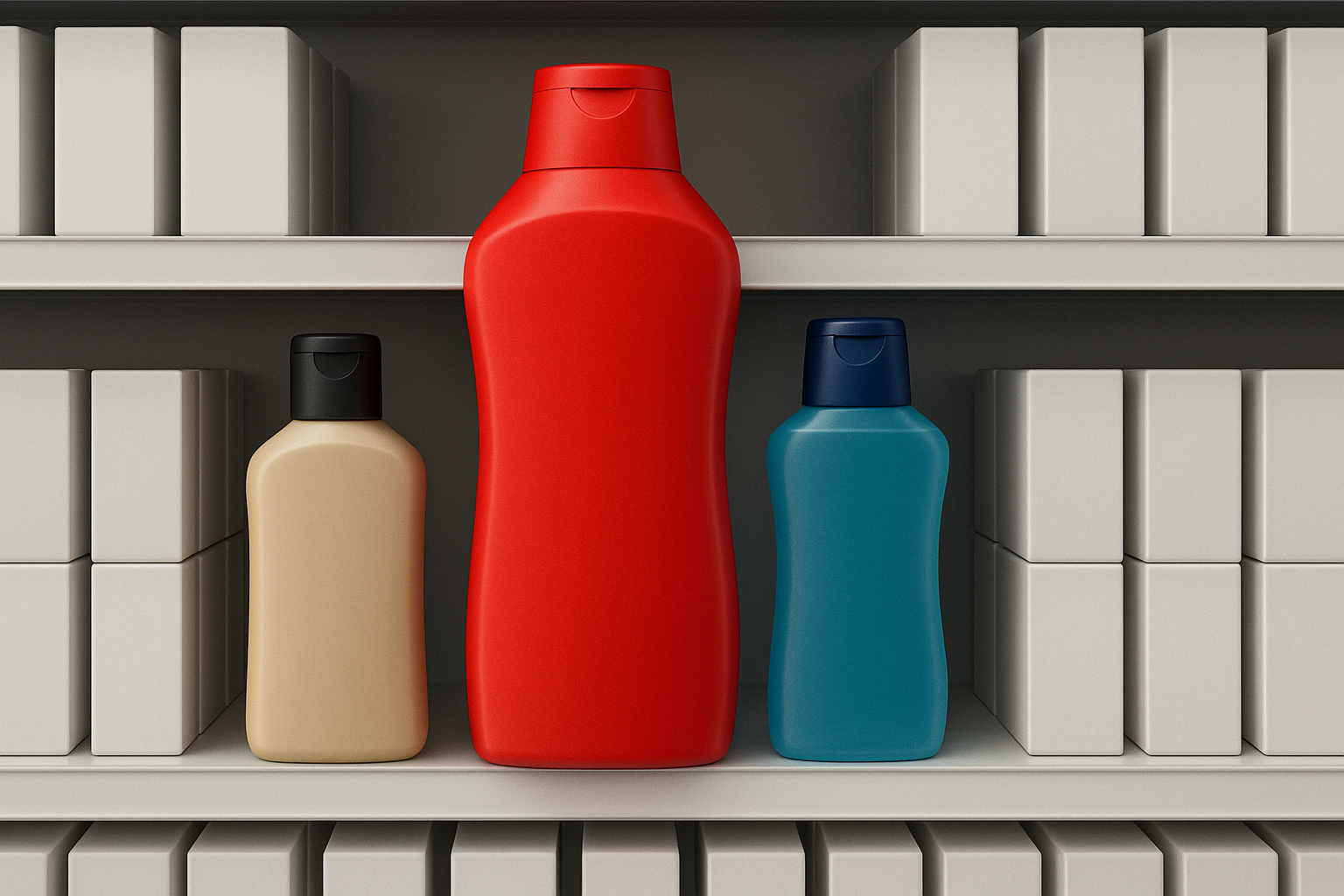
- Big packs feel generous They imply value, abundance, family usage or everyday reliability. Even online—where size has to be translated through imagery—large proportions communicate “you’re getting a lot”.
- Smaller, compact packs feel premium or concentrated They suggest intensity, richness or speciality. Think serums, artisan foods or high-strength formulations.
Neither approach is inherently right or wrong. What matters is alignment—whether the pack’s proportions match the product’s intended role and price point.
If the expectation and the experience don’t match, shoppers immediately sense something is “off”, even if they can’t say why.
Structure Speaks Louder Than Claims
Shoppers don’t read detailed usage instructions unless they have to. Instead, they infer how a product is meant to be used by looking at how the pack behaves on a shelf or screen.
- Tall, upright structures feel generous, everyday, pourable, sharable.
- Shorter, denser structures feel concentrated, potent, or crafted.
The structure of your pack is a silent promise. It tells shoppers what kind of experience to expect.
This is why one of the biggest mistakes brands make is structural mismatch: placing a premium product in a value-shaped pack.
Nothing downgrades perceived worth faster.
Where Adcock Solutions Helps Brands Win
This is exactly the territory where Adcock Solutions Ltd brings real commercial advantage. Their work blends behavioural psychology, physical pack testing and online fluency analysis to help brands:
- understand how pack proportions affect emotional response
- identify structural cues that reinforce the right product role
- optimise packaging for shelf visibility and online thumbnails
- avoid unintended value cues that undermine price or quality
- design packs that feel immediately “right” to the fast, instinctive shopper brain
Their approach helps brands stop designing for internal preference and start designing for how people actually choose.
The result is packaging that doesn’t just sit on a shelf—it sells on the shelf.
The Bottom Line
Packaging has never had more responsibility. In a world of fast decisions and infinite choice, it must communicate value, meaning and reassurance in a single glance.
Get the size and structure right, and your pack does the selling for you.